How do I recognize a curveball in youth baseball?
Recognizing a curveball starts with this simple cue right out of the pitcher's hand: If it looks like it's going to be a ball (high or outside the zone), it will likely break down into a strike because overspin/topspin drives the ball from above the zone into the strike zone. If it looks like a strike out of the hand, it will probably end up a ball as the overspin carries it out of the bottom of the zone. Train your eyes on release point and initial flight path—part 1 of our 3-part series on hitting the curve.
Looks like a ball out of hand → expect break down into strike (topspin pulls it in)
Looks like a strike out of hand → expect break out of zone (topspin pushes it down/out)
Focus on early recognition → better timing and decision-making at the plate
How do I hit a curveball once I recognize it youth baseball?
After recognizing it (if it looks like a ball out of the hand, expect it to break into a strike; if it looks like a strike, expect a ball), let the pitch travel deep to you—stay back and don't lunge early. Stay tall with your body positioned out of the strike zone to keep balance and good vision. Swing down on the dropping ball (downward path) because swinging up against overspin leads to pop ups. Swing hard—no decelerating or hoping; aggressive swings turn solid contact into real hits.
Let it get deep → improves timing and read on the break
Stay tall + body back → maintains level eyes and proper swing plane
Swing down hard (no easing up) → counters the drop, avoids weak pop ups for line drives or hard contact
How to practice hitting curveballs in batting practice without a real pitcher?
Use this simple cage drill to train recognition and approach safely—no need for live curveballs (which are hard to control and frustrating in practice). Have the "pitcher" bounce a ball off the cage floor to simulate the off-speed arc and downward break of a real curve. This creates the same visual flight path: starts high/like a ball (expect strike) or looks like a strike (expect ball out). Hitter practices the cues—let it travel deep, stay tall/body back, swing down hard—no easing up. Builds eye recognition, timing, and aggressive contact on dropping balls without the chaos of thrown curves.
Bounce drill mimics curve's overspin arc → trains early "looks like ball → strike" or "strike → ball" read
Lets hitter stay back + swing down hard → counters drop, avoids pop ups, produces solid hits
Safe, repeatable in cage → perfect for youth/middle/high school players building confidence on breaking balls
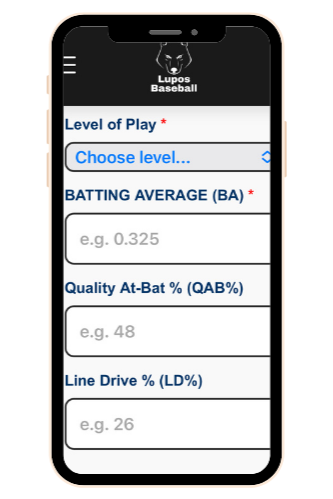
Join the team and track your success using our advanced Sabermetric Calculator included in team membership